Now Reading: Top AI Trends Shaping the Year Ahead: From Voice Agents to Agent‑Based Commerce
-
01
Top AI Trends Shaping the Year Ahead: From Voice Agents to Agent‑Based Commerce
Top AI Trends Shaping the Year Ahead: From Voice Agents to Agent‑Based Commerce


As we progress through 2026, artificial intelligence (AI) continues to shift from foundational research and early experimentation toward real‑world deployments, autonomous agents, and new ways of interacting with technology. Several interconnected trends — from voice‑driven interfaces to agent‑based commerce — are defining how AI will impact businesses, consumer behavior, and enterprise workflows this year. Below is a breakdown of the key trends shaping the AI landscape in 2026.
1. Autonomous AI Agents Become a Central Force
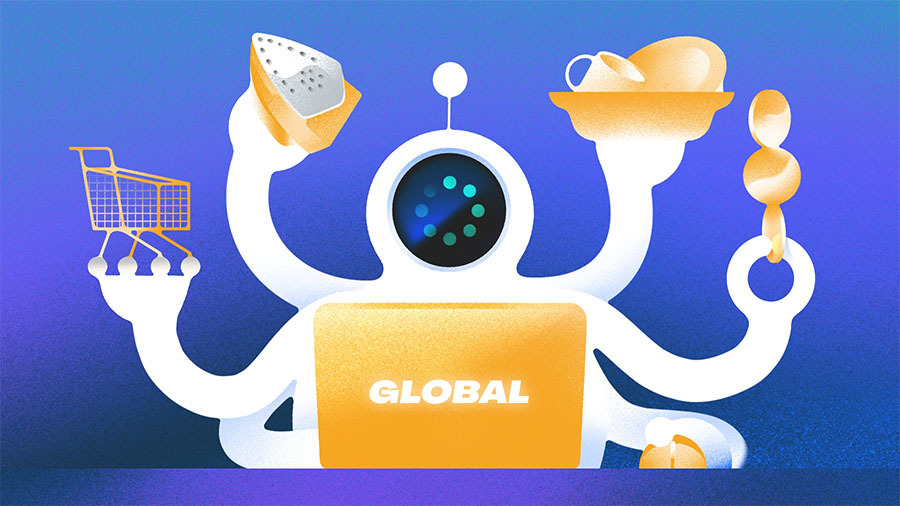
AI agents — software systems that perform tasks autonomously and interact with other systems — are now emerging as one of the leading paradigms in AI. Unlike traditional chatbots, these agents can reason, plan, and execute multi‑step tasks across applications and platforms without explicit human direction, making them far more capable than earlier generations of text‑based assistants.
This trend reflects a broader move toward agentic platforms that can act like digital co‑workers, continuously monitor processes, and trigger actions across systems with minimal human intervention. Enterprises are beginning to adopt tools where AI agents handle workflows end‑to‑end — from resolving customer support tickets to carrying out operational tasks.
In 2026, major players such as Baidu and Alibaba have accelerated development of AI agents capable of complex actions like research, content editing, and task coordination, highlighting global momentum behind this model.
2. Voice Agents Evolve Beyond Basic Conversations
AI voice technology in 2026 has matured significantly beyond simple question‑and‑answer systems. Voice agents are now expected to understand tone, sentiment, urgency, and context, and can interact more naturally through spoken language in customer support and enterprise settings.
Emerging voice AI tools offer adaptive orchestration — connecting telephony systems, customer support databases, CRM platforms, and backend tools. These systems can intelligently route queries, escalate issues, or provide context‑aware responses, effectively transforming voice from a navigational interface into a powerful control layer for business interactions.
Businesses are integrating voice AI into workflows to handle high volumes of customer interactions, reducing operational burden and enhancing user satisfaction. This trend indicates voice as a default interaction mode in both consumer and enterprise environments, especially where hands‑free or accessible interactions are essential.
3. Multimodal Interactions Become Standard
Another major trend is the rise of multimodal AI agents — systems that can process and generate text, audio, images, and even video in a single workflow. These agents are prized not only for their conversational abilities but for their capacity to interpret rich inputs from different sources and act accordingly.
This means users can engage with AI through speech while simultaneously providing visual context, such as uploading an image or pointing a camera at an object to get immediate information or assistance. Combined with generative AI, these multimodal interactions make AI more adaptable and useful across a range of tasks from design to e‑commerce.
4. Agent‑Powered Commerce Redesigns Online Shopping
AI is reshaping commerce into more proactive, conversational, and personalized experiences — a trend often called agent‑based commerce. Rather than navigating traditional e‑commerce websites, consumers increasingly interact with AI agents that help discover products, suggest personalized recommendations, and even complete transactions.
Major technology companies are actively exploring this space. For example, Google’s Gemini AI has introduced shopping capabilities that allow users to browse and purchase items directly within the AI interface, supported by partnerships with major retailers like Walmart, Shopify, and Target.
This change moves shopping from static web pages to dynamic, conversational experiences — where recommendations, checkout, and post‑purchase support are all orchestrated through AI. As this trend grows, we may see AI agents acting as intermediaries between customers and multiple brands, automating comparisons, price checks, or product bundles.
5. AI Agents Cross Platforms and Ecosystems
A key trend for 2026 is interoperability — the ability of AI agents to operate across devices, applications, and organizational boundaries. Agents are becoming smarter by aggregating data from diverse sources, enabling more coherent decision‑making and action.
This interoperability makes it possible for a single AI agent to assist with a variety of tasks — from smart devices at home to enterprise systems at work — paving the way for more unified AI experiences across personal and professional life.
6. Specialized and Modular Agent Architectures
Rather than relying on one monolithic AI agent, businesses are starting to deploy specialized micro‑agents — each designed for specific workflows like lead generation, customer onboarding, or data analysis. This modular approach improves scalability, resource efficiency, and flexibility.
By building ecosystems of cooperating agents, organizations can automate entire business processes while retaining control and visibility over specific tasks. This makes agentic systems easier to deploy and manage, especially in enterprises with diverse operational needs.
7. Ethical, Secure, and Value‑Aligned AI Agents
As agents become more autonomous, ethical safeguards and built‑in value alignment are gaining prominence. Companies are investing in frameworks that ensure AI behavior adheres to ethical standards and company policies, anticipating regulatory requirements and protecting brand reputation.
This includes bias mitigation, transparency protocols, and mechanisms that make AI decisions interpretable and accountable, particularly in sensitive domains like finance, healthcare, and governance.
What This Means for 2026 and Beyond
The AI landscape of 2026 is characterized by agents that do more than interact — they act. From voice‑enabled assistants that streamline communication to commerce agents that personalize shopping experiences and enterprise agents that automate workflows, AI is becoming a deeply integrated layer in technology stacks and everyday digital life.
These trends underscore a shift from reactive AI tools — ones that answer questions — to proactive, autonomous systems that anticipate needs, take actions, and redefine how humans and machines collaborate.