Now Reading: Former OpenAI CTO’s Startup Thinking Machines Lab Continues Rapid Growth and Strategic Partnerships
-
01
Former OpenAI CTO’s Startup Thinking Machines Lab Continues Rapid Growth and Strategic Partnerships
Former OpenAI CTO’s Startup Thinking Machines Lab Continues Rapid Growth and Strategic Partnerships


When Mira Murati, former chief technology officer of OpenAI, left the company in late 2024, she set out to build a new kind of artificial intelligence organization with a bold vision: to develop AI systems that are more broadly understood, customizable, and capable. Just over a year later, Murati’s venture, Thinking Machines Lab, has become one of the most closely watched AI startups globally — attracting massive funding, securing strategic partnerships with industry leaders, and generating both excitement and controversy in the rapidly evolving world of AI.
A Record‑Setting Launch and Explosive Early Funding
Thinking Machines Lab was officially launched in February 2025 in San Francisco with a team heavily recruited from top AI organizations, including OpenAI, Meta AI, and Mistral AI. In its first six months, the company closed a landmark $2 billion seed funding round, one of the largest early‑stage financings in tech history, led by major venture capital firms such as Andreessen Horowitz with strategic investments from Nvidia, AMD, Accel, ServiceNow, Cisco, and Jane Street. The round valued the startup at approximately $12 billion.
Investors reportedly backed the startup despite its lack of products or revenue — betting instead on the strength of its leadership team and research ambitions. From the beginning, Murati positioned Thinking Machines Lab as a frontier AI lab with a mission to address gaps in existing models by focusing on tools and systems that are easier to tune, customize, and apply to real‑world problems.
Building Infrastructure and Partnerships with Industry Giants
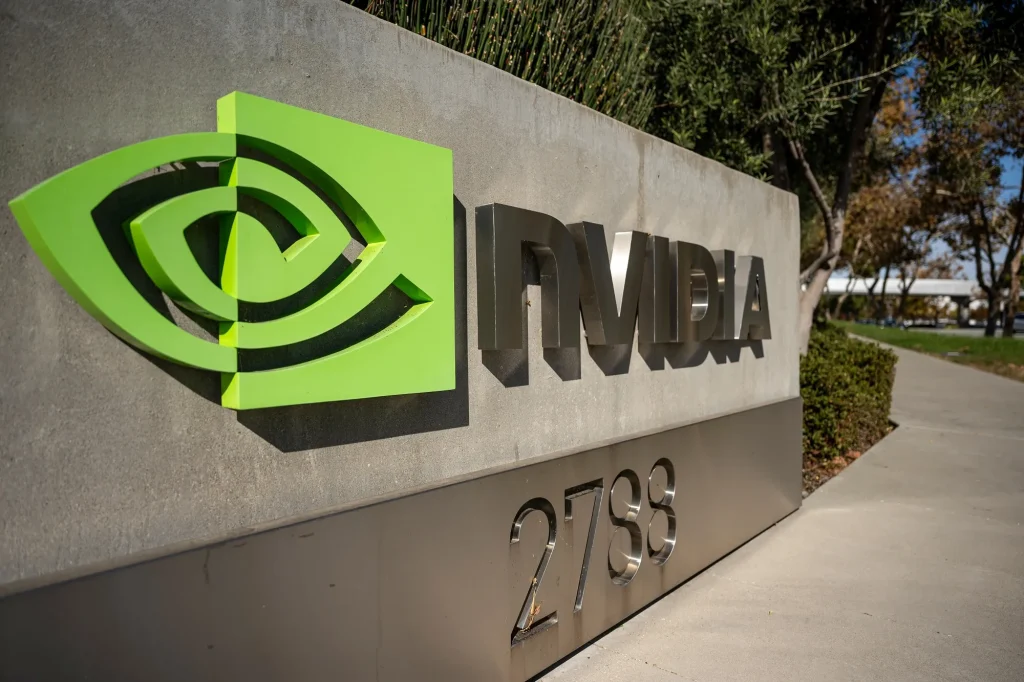
A defining moment for Thinking Machines Lab in 2026 was the announcement of a multiyear strategic partnership and investment with Nvidia, one of the world’s leading hardware innovators for AI. Under the deal, Nvidia plans to deploy at least one gigawatt of its next‑generation GPU infrastructure, based on the company’s Vera Rubin platform, to support Thinking Machines’ model training and platform development. The infrastructure commitment — which experts suggest could be valued at tens of billions in compute value alone — is set to kick off in early 2027.
In statements about the partnership, Nvidia CEO Jensen Huang praised Thinking Machines Lab’s vision and technical team, while Murati said the collaboration would “accelerate our capacity to build AI that people can shape and make their own.” This amplifies the startup’s mission to deliver highly customizable AI systems at scale.
The Nvidia tie‑up also reflects broader industry trends: Nvidia has been actively investing in AI startups across the ecosystem to strengthen its role as the foundational compute provider for next‑generation models.
Product Development and AI Tooling
Although Thinking Machines Lab remains relatively secretive about its internal research, the company has started to roll out early tools and platforms aimed at developers and researchers. One of the first publicly discussed products is “Tinker”, an application programming interface (API) designed to help users fine‑tune, train, and deploy large AI models with greater ease. Tinker promises to simplify distributed training, dataset management, and model orchestration — capabilities critical to accelerating AI experimentation and adoption.
This approach suggests Thinking Machines is not just trying to build base models like some of its larger competitors, but also creating infrastructure and tooling that enable others — from startups to research labs — to leverage advanced AI more effectively.
Talent Dynamics and Leadership Changes
Like many high‑profile AI startups, Thinking Machines Lab has experienced notable personnel shifts in its short history. Several key founders — including co‑founder and former CTO Barret Zoph, along with researchers Luke Metz and Sam Schoenholz — left the company in early 2026 to rejoin OpenAI. This exodus highlights the ongoing competition for talent among leading AI organizations and the gravitational pull of established labs.
In response to these departures, Thinking Machines appointed Soumith Chintala — a renowned AI researcher and co‑creator of the PyTorch framework — as its new CTO. Chintala’s reputation and technical leadership are seen as key to stabilizing the company’s engineering direction and advancing its research agenda amidst rapid workforce changes.
Industry Reception and Valuation Momentum
Despite leadership churn, Thinking Machines Lab remains a major player in the AI startup scene. At its $12 billion early valuation, the startup has drawn comparisons with other elite AI ventures and is reportedly in talks for future funding rounds that could boost its valuation even further — possibly approaching the $50 billion range according to some early reports.
Analysts view this as part of a broader pattern in which elite teams led by well‑known AI executives can attract outsized capital, even before delivering major products or revenues. This phenomenon reflects not only investor confidence in AI’s long‑term potential but also a premium placed on talent continuity and foundational research beginnings.
Looking Ahead: Challenges and Opportunities
Thinking Machines Lab stands at a critical juncture: on one hand, it has robust backing, world‑class infrastructure support, and high visibility in the competitive AI race; on the other, the firm faces the complex challenges of scaling research into reliable, differentiating products, retaining top talent, and demonstrating value beyond its early promise.
As the AI industry continues to evolve, the progress of Thinking Machines Lab — particularly its ability to deliver on its mission of wide‑scope, customizable AI systems — will be a bellwether for how new entrants can shape the future of artificial intelligence when backed by leading investors and strategic tech partnerships.